
New Beginnings: Welcome to Building Blocks!

“Be the change you want to see in the world.”
This is the mantra that I have tried to cling to and has been a guiding light in my life. This has had some exhilarating, but sometimes chaotic consequences. So, two qualifications, two continents and multiple schools later, where does this leave me…with crates and crates of educational resources stored in my brother in law’s home!
Jokes aside, have you ever had an idea that you think could work but just keep putting it off for the right time. Well, with the dawn of my husband’s 30th birthday and my next big milestone being my 40th birthday (eek!) we decided that there was no time like the present to get our acts in gear and start on our mission to try and change the world.
So, who are we?
We are a husband and wife team who are passionate about education and making a difference in children’s lives. I am a qualified Occupational Therapist and Foundation Phase (early years) Teacher and my husband, Eugene, is trained in business and is currently studying his MBA. While we don’t have children of our own (but do have two very fat guinea pigs and a gutsy cat), we are passionate about using our skills, experience and passions to build up tomorrow’s generation. This is how Building Blocks Education came about…
What is BBE?
BBE is a project to bring fun and exciting printable resources that incorporate Occupational Therapy concepts into early learning of Literacy, Numeracy and Basic concepts as well as looking at Fine Motor skills and Behaviour. We believe that each child is unique and has their own way of learning and engaging with the world and so the learning resources need to reflect that. In essence, our vision as the Building Blocks team is to focus on the building blocks of learning to assist with building children’s abilities, confidence and love for learning.
So, where do we begin?
We’re proud to have just launched our first downloadable product (of which we plan to have many more in the years to come) focusing on Dolch sight words. These are the most common 220 ‘service words’ and 95 nouns used in the modern English language. Many of these words cannot be sounded out phonetically and so they need to be recognised ‘by sight’. If a child does not know these words, they will struggle to read with fluency and comprehension. Since these words make up between 50 and 75 percent of words found in schoolbooks, it’s not surprising that a child struggling with sight words would also struggle in every other learning area. This in turn affects their confidence and motivation for learning.
How do I know if my child is struggling with sight words?
Your child may be struggling with sight words if they:
- struggle to read age-appropriate books fluently?
- lack the confidence to try new stories?
- try to avoid reading?
- struggle to understand what they are reading?
How can we help?
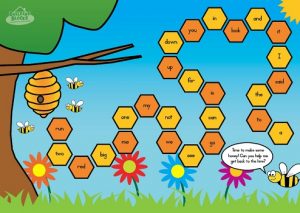
Our product includes a story book and lots of games and activities to introduce and reinforce these sight words. By building their confidence in a non-threatening and fun way, children are given the opportunity to explore their new found skills and fosters their creativity. Here are a couple of free printable products to check out:
In the future, this blog will serve as a way to share our experiences, provide insight into some building blocks of learning with practical examples, and provide tips and anecdotes on working with children. We hope that this will serve as a useful tool for you and would welcome your comments, questions and sharing.
To celebrate our launch (and you reaching the end of this slightly-longer-than-average blog), we’ll be giving away three copies of our Dolch Sight Words Full Suite product! (That’s almost 700 pages of printable resources each!) To win one, all your need to do is to like our Facebook page. The winner will be announced on Facebook in one month. You can also check out our resources via our website or follow us on Pinterest.
It seems fitting to be launching BBE on Mandela Day – a man who gave so much to South Africa’s future and the world as a whole. As he said, education can change the world. So, here’s to changing the future, one child at time…